Measuring Change: Real-World Impact & ROI from Nigeria’s Energy Transformation

What if you could see the real Return on Energy Investments—not just in spreadsheets, but in megawatts delivered, emissions avoided, communities empowered, and revenue losses reversed?
Today, the world is investing billions into clean-energy technologies, but the real question we should be asking is: Which interventions actually move the needle, and where is the impact undeniable?
Across Africa, the stakes are significantly high.
Utility companies are racing to modernise their grids, private developers are scaling renewables at a record pace. To top it all off, regulators are pushing policies that favour transparency, reliability, and measurable performance.
In this article, we break down the numbers, examine verified field data, and highlight the interventions delivering the strongest returns; from grid optimisation projects to smart metering deployments, mini-grid performance benchmarking, and solar rollout efficiencies.
1. When 225,631 Meters Make a Difference
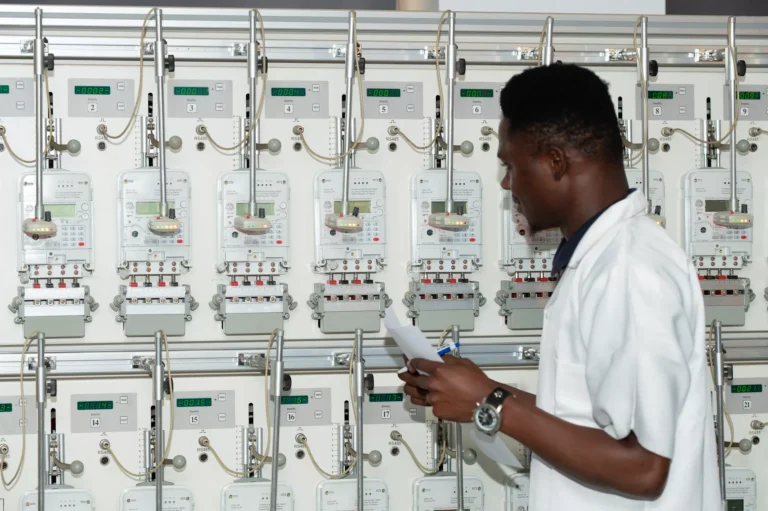
According to the Nigerian Electricity Regulatory Commission (NERC) Q2 2025 report, distribution companies (DisCos) installed 225,631 new electricity meters—a 20.55% increase from the previous quarter.
However, despite this progress, only 6.42 million out of 11.82 million active customers in the Nigerian Electricity Supply Industry (NESI) were metered as of June, translating to a metering rate of 54.33%.
This data reveals a powerful trend: investment is accelerating, but the gap remains. Around 45% of Nigerian electricity users still lack meters, leaving them exposed to estimated billing.
2. Impact in Action: The Real Returns on Metering
A. Financial Returns + Revenue Assurance
- Reduced Losses: More metering means fewer “phantom” (unbilled) customers, helping DisCos tighten their revenue flows.
- Greater Transparency: Meter-based billing restores trust—especially for commercial clients and high-consumption users.
- Capital Efficiency: With clear usage data, utility companies can better plan their investments and prioritize feeder upgrades.
B. Social Value & Customer Trust
- Consumer Protection: Customers benefit from fairer billing and less overestimation.
- Operational Feedback: DisCos can respond faster to complaints and service interruptions.
- Regulatory Compliance: A metered system aligns more strongly with NERC’s consumer protection mandates.
3. Clean Energy Access: Mini-Grids Deliver Real Change
The Energy Sector Management Assistance Program (ESMAP) has led major investments in Nigeria’s solar hybrid mini-grid market. These efforts have directly supported over 5.5 million Nigerians through 125 mini-grids and 1 million+ solar home systems.
A recent $200 million deal signed to build 400 renewable mini-grids is projected to bring clean electricity to 1.5–2 million people—especially in underserved rural and peri-urban communities.
According to ESMAP, up to 490 million people in electricity-access-deficit countries could be reached by 2030 through mini-grids.
Impact highlights:
- More than 5,000 green jobs created.
- Boost in local entrepreneurship, literacy, and business productivity.
- Renewable energy investments that outlast typical donor-funded projects, thanks to hybrid financing models.
4. The Broader Sustainability Dividend
Across sub-Saharan Africa, renewable energy capacity reached ~30% of total power generation as of 2021.
IRENA warns that energy access remains fragile—over 83% of Sub-Saharan Africa’s population still lacks reliable, grid-based electricity.
For Nigeria, this has major implications: expanding metering and scaling mini-grids can drive not just ROI in financial terms, but social outcomes—greater gender equality, reduced reliance on polluting energy sources, and economic empowerment of off-grid communities.
Why You Should Care
For Utilities & DisCos
- Metering accelerates cash flow and reduces pilferage.
- Mini-grids offer a scalable way to expand service reach without heavy central grid investments.
For Investors & Donors
- The social + financial ROI of mini-grids is strong—both in clean access and long-term viability.
- Impact financing aligned with SDG (Sustainable Development Goals) frameworks becomes more attractive with real data.
For Policymakers & Regulators
- Meter-driven billing supports regulatory transparency.
- Mini-grid growth strengthens national electrification targets and resilience.
For Engineers & Developers
- Emerging projects with real-world adoption provide fertile ground for innovation.
- Data from metered customers and mini-grid deployments can feed GIS systems, spatial planning, and optimization algorithms.
Conclusion: Real Impact, Real Opportunity
Turbo Energy’s metering and mini-grid initiatives are driving transformative change—not just in kilowatt-hours, but in economic growth, trust-building, and sustainable development. The numbers tell a story of ROI that matters to investors, regulators, utilities, and communities alike.
If you’re ready to engage with this energy revolution—whether as a developer, partner, or investor— let’s connect.
Follow us on social media, subscribe to the Turbo Energy Newsletter, or reach out to partner with our engineering and clean-energy experts.