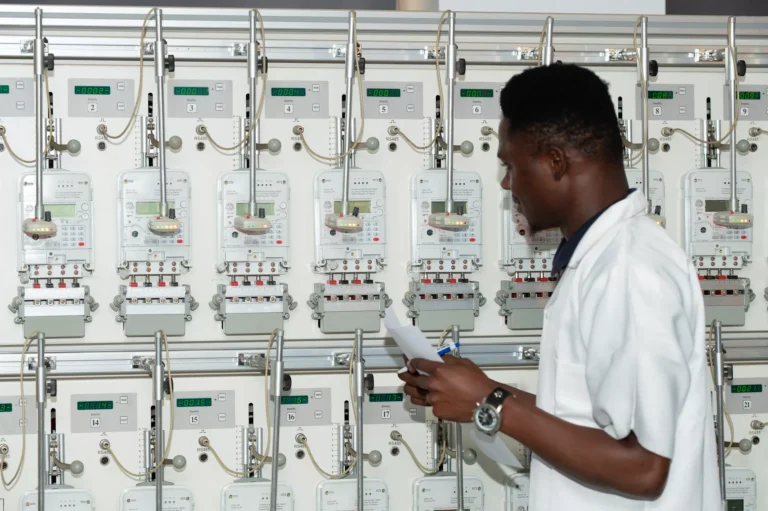
Smart Meter Deployment: A Technical Guide & Step-by-Step Workflow for Modern Utilities

By Turbo Energy – Smart Metering, Grid Intelligence & Sustainable Infrastructure
Executive Summary
Smart meter deployment is no longer optional—it is essential infrastructure for any utility seeking operational efficiency, revenue protection, and real-time grid visibility. Yet successful deployment requires more than installing devices. It demands a structured workflow, precise planning, and an integrated data strategy.
This whitepaper provides a detailed, technical walkthrough of the entire deployment lifecycle—from pre-installation field audits to live system integration. Developed from industry best practices and Turbo Energy’s on-ground experience across Africa, this guide is built to help utilities reduce deployment errors, improve revenue assurance, and accelerate rollouts with confidence.
Introduction: Why Smart Metering Matters
Utilities today face rising energy demand, grid instability, and revenue leakages from unmetered connections, bypassing, and inaccurate billing. Smart meters offer the ability to:
- Capture real-time consumption data
- Enable prepaid and postpaid billing flexibility
- Reduce operational losses
- Enhance customer transparency
- Improve outage management
- Support grid planning and load forecasting
Yet the value of smart metering depends on how well the deployment is executed. A poor rollout creates long-term data issues, billing disputes, and operational inefficiencies. An excellent rollout sets the foundation for a fully digitised, predictable, and financially healthy utility.
Chapter 1: Pre-Deployment Planning
1. Customer & Asset Data Consolidation
Accurate customer data is the backbone of smart metering. Prior to deployment, utilities must:
- Validate existing customer records
- Correct address and GPS errors
- Assign unique asset IDs
- Confirm tariff categories
- Link each meter to a verified customer account
2. Field Survey & Infrastructure Audit
A physical audit ensures there are no surprises during installation. This includes:
- Assessing existing meter condition (if replacement)
- Mapping pole/transformer locations
- Documenting load requirements
- Recording GPS coordinates
- Taking photographic evidence
- Identifying risk zones (tampering hotspots)
3. Communication Network Assessment
Smart meters rely heavily on reliable communication. Pre-deployment tests should validate:
- RF coverage
- Cellular (2G/3G/4G/NB-IoT) availability
- PLC network feasibility
- Signal quality at installation points
4. Logistics & Inventory Management
Efficient rollouts require coordinated logistics:
- Warehouse management & serial tracking
- Installer routing and territory allocation
- Device staging, configuration & testing
- Real-time deployment dashboards
Turbo Energy provides utilities with end-to-end deployment mapping, routing optimisation, and device lifecycle monitoring tools to reduce downtime and accelerate rollout progress.
Chapter 2: Installation Workflow
This step-by-step section outlines the globally accepted best practice workflow for smart meter installations.
Step 1: Customer Notification & Scheduling
- Send SMS/email notifications
- Share installation timelines
- Provide customer support contacts
- Ensure access permissions
Step 2: Safety Checks & Site Preparation
Installers must verify:
- Switch-off procedures
- Safe working conditions
- Proper grounding
- Load conditions
- Circuit integrity
Step 3: Meter Removal & Installation
Technicians should follow the defined sequence:
- Disconnect load
- Remove existing meter (if applicable)
- Document meter readings
- Install new meter according to manufacturer specifications
- Seal meter and enclosure
- Photograph final installation
All steps must be logged digitally using field service apps with GPS stamping.
Step 4: Commissioning & Connectivity Testing
Commissioning ensures the meter is fully operational:
- Activate meter in the system
- Test communication (RF/Cellular/PLC)
- Validate voltage, current, and load
- Confirm phase correctness
- Perform test vend (prepaid) or test read (postpaid)
- Sync data with the head-end system (HES)
Step 5: Customer Education
A successful deployment includes:
- How to read meter information
- How prepaid vending works
- Mobile app onboarding
- Reporting faults or outages
- Energy efficiency recommendations
Utilities that educate customers see fewer complaints and higher satisfaction scores.
Chapter 3: Post-Deployment Verification
1. Acceptance Testing
The utility verifies:
- Data accuracy
- Meter event logs
- Tariff configuration
- Billing alignment
- Communication stability
2. Performance Monitoring
Deployment is not complete until meters demonstrate:
- Continuous communication
- Stable data flow
- Accurate consumption patterns
- Zero mismatch with billing
3. Loss Reduction & Revenue Assurance
Smart metering opens significant opportunities for loss reduction:
- Identify bypassing in real time
- Detect meter tampering
- Highlight abnormal consumption
- Automate reconnections/disconnections
- Improve revenue collection cycles
Turbo Energy uses AI-driven anomaly detection to help utilities catch leakage before it escalates.
Chapter 4: Integration With Utility Systems
Smart metering requires seamless communication across:
- Head-End System (HES)
- Meter Data Management System (MDMS)
- Billing System
- Customer Information System (CIS)
- Mobile Apps / Self-Service Portals
- SCADA & Grid Monitoring
A well-integrated architecture ensures real-time visibility, accurate billing, and automated operational workflows.
Turbo Energy provides systems integration, API services, and performance optimisation for utilities upgrading from legacy systems.
Chapter 5: Common Deployment Pitfalls & How to Avoid Them
Here are some common mistakes to look out for as you deploy:
1. Poor data quality → leads to mis-billing
2. Weak communication networks → broken data streams
3. Inconsistent installation practices → technical losses
4. Inadequate customer education → support overload
5. Lack of monitoring tools → silent meter failures
Turbo Energy helps utilities deploy standardised workflows, reducing error rates and increasing deployment speed.
Conclusion
Smart meter deployment is a transformational opportunity for utilities, but only when done right. By following a structured workflow supported by digital tools, field automation, data accuracy, and systems integration, utilities can unlock the full benefits of smart metering.
Turbo Energy stands ready as your guide, supporting planning, deployment, monitoring, and optimisation to ensure your investment delivers long-term value for customers and communities.
Next Steps
Download more whitepapers, technical guides, and implementation checklists to support your smart metering strategy.
Or speak to our team to start your rollout with confidence.